Desde 2026, el mercado global de chips de memoria ha entrado en un nuevo ciclo alcista. Los principales fabricantes están aumentando agresivamente la producción en masa de HBM4. Ante la fuerte y sostenida demanda de servidores de IA y centros de datos, la industria ha experimentado frecuentes expansiones de capacidad.
El continuo aumento de la producción de chips de memoria ha impulsado directamente la demanda de productos químicos electrónicos de grado básico. Mientras tanto, los estándares de pureza "extremos" impuestos por los nodos de proceso avanzados han planteado serios desafíos a los vínculos de empaquetado, almacenamiento y transporte. Aprovechando su larga experiencia en tecnologías ultralimpias, BSL ha desarrollado de forma independiente el
Tambor de HDPE ultra limpio
Utilizando las propiedades superiores del polietileno de alta densidad (HDPE) de ultra alta pureza, nos comprometemos a brindar una protección confiable para el almacenamiento y transporte de productos químicos de grado electrónico.
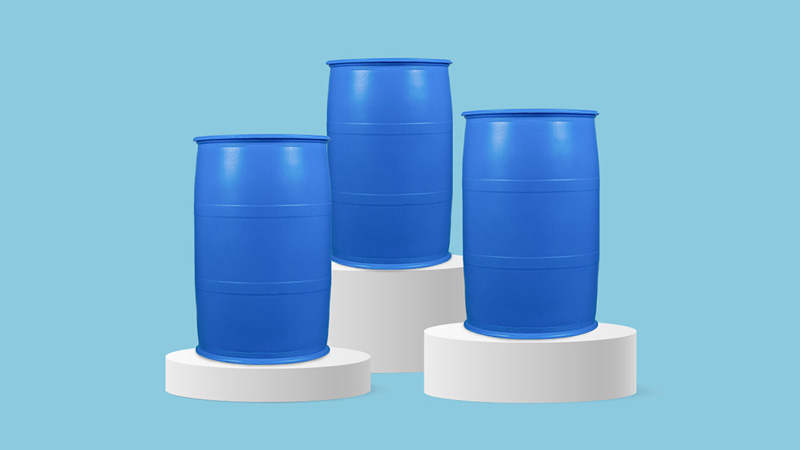
1. Tambores de HDPE ultra limpios: La barrera de "alta pureza" para productos químicos de grado electrónico.
Los productos químicos de grado electrónico se consideran la "sangre invisible" de la industria de los semiconductores. Todos los procesos, desde la limpieza, el grabado y la deposición hasta la planarización químico-mecánica (CMP), dependen de estos productos químicos. En los procesos de fabricación avanzados, el ancho de las líneas de los chips ha alcanzado la escala nanométrica y subnanométrica. Tomando como ejemplo la memoria HBM4, algunos fabricantes líderes adoptan el proceso 1c (aproximadamente 11-12 nanómetros) para HBM4 (un tipo de DRAM), con chips de soporte que utilizan procesos lógicos de 4 nm. A esta escala microscópica, cualquier contaminante a nivel micrométrico o submicrométrico en la superficie de la oblea puede provocar fallos en el dispositivo.
Los productos químicos de grado electrónico son puros en el momento de su fabricación, pero los iones metálicos o las partículas liberadas de los envases durante el almacenamiento y el transporte los contaminan directamente. Gracias a su excelente estabilidad química, procesabilidad y resistencia física adecuada, el HDPE de ultra alta pureza se ha convertido en el material preferido para el envasado de productos químicos de grado electrónico.
Gracias a sus materias primas de HDPE de ultra alta pureza y a sus tecnologías de procesamiento patentadas, los bidones BSL Ultra-Clean HDPE mantienen niveles extremadamente bajos de lixiviación de iones metálicos y partículas cuando entran en contacto con ácidos fuertes, álcalis fuertes y disolventes orgánicos, formando una sólida barrera de "alta pureza" para productos químicos de grado electrónico.
2. El almacenamiento estable a largo plazo garantiza una calidad química constante.
La fabricación de semiconductores depende del uso continuo y frecuente de productos químicos. Las fábricas de obleas suelen almacenar un cierto volumen de productos químicos de grado electrónico para mantener una producción ininterrumpida, lo que requiere bidones de embalaje que garanticen una excelente estabilidad a largo plazo.
Los bidones de HDPE ultra limpios de BSL están diseñados con estrictos requisitos de sellado. La boca del bidón presenta un diseño de alta estanqueidad que previene eficazmente la entrada de impurezas externas y contaminantes iónicos, protegiendo así los productos químicos de la contaminación ambiental. Su estructura optimizada ofrece una excelente resistencia al impacto y a la compresión, y cuenta con la certificación de alta resistencia UN 1H1/Y1.9/200, lo que garantiza su integridad estructural durante el transporte y el almacenamiento. Esto asegura que la pureza química se mantenga inalterada durante periodos de almacenamiento de varios meses o más.
3. Especificación 200L adaptada a operaciones de precisión en fábricas de obleas.
En la fabricación de semiconductores, el suministro de productos químicos generalmente se divide en dos categorías: una son los productos químicos utilizados directamente en las herramientas de proceso, en su mayoría en envases de pequeño volumen; la otra son los productos químicos a granel para el inventario en planta, almacenados y suministrados de forma centralizada en bidones de 200 litros y entregados automáticamente a varios puntos del proceso mediante sistemas de suministro de productos químicos.
La especificación de 200 litros es el formato estándar para el envasado de productos químicos de grado electrónico en la industria de semiconductores. Ofrece un equilibrio óptimo entre la eficiencia del transporte y el aprovechamiento del espacio de almacenamiento: su gran capacidad en un solo bidón reduce los costes operativos y los riesgos de contaminación derivados de los cambios frecuentes de envase, mientras que su peso moderado permite su manipulación con carretillas elevadoras y equipos estándar, lo que la hace compatible con los sistemas de suministro de productos químicos (CDS) existentes en las fábricas de obleas.
El bidón BSL Ultra-Clean HDPE de 200 L presenta un diseño ligero pero de alta resistencia, con pesos estándar de 10,5 kg/12,5 kg para facilitar su manipulación y apilamiento, garantizando a la vez durabilidad y resistencia a la presión. El cuerpo del bidón está diseñado para minimizar los residuos, lo que contribuye a optimizar el uso de los productos químicos, reducir los desechos y mejorar la eficiencia operativa general. Actualmente, todos los indicadores del bidón BSL Ultra-Clean HDPE de 200 L cumplen con los requisitos de limpieza para envases de grado electrónico y el producto se encuentra en la fase de cualificación del cliente.
A medida que los chips de IA sigan evolucionando, la fabricación de chips impondrá requisitos de pureza cada vez más estrictos a los productos químicos. Como consumible clave para el almacenamiento y transporte de productos químicos de grado electrónico, los bidones de HDPE ultra limpios adquirirán mayor importancia.

BSL
Los avances tecnológicos de BSL en bidones de HDPE ultra limpios ofrecen a las fábricas de obleas nacionales una solución fiable para el almacenamiento y transporte de productos químicos de grado electrónico. Centrada en las necesidades del cliente, BSL seguirá actualizando sus productos y mejorando su sistema de control de calidad, contribuyendo así a la independencia y controlabilidad del eslabón de almacenamiento y transporte de productos químicos de grado electrónico en la cadena de valor de la industria de semiconductores.


 Servicio en línea
 +86 592 625 8655-ext-622
 carrie@xmbsl.com
 carrielin36
 +8613850062482


 English
 français
 español
 日本語
日本語 Tiếng việt
 中文
中文